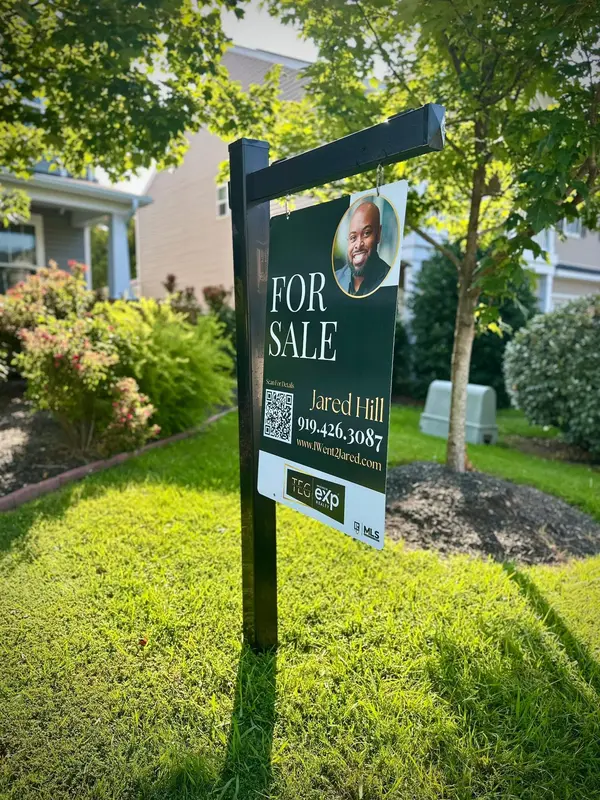

Selling a Home in a Tough Raleigh Market? 9 Strategies That Work

Selling Your Home in a Tough Market? 9 Strategies That Actually Work in Raleigh, NC
By Jared Hill | The EASE Group at eXp Realty
Remember when you could put a house on the market, take a few pictures, and practically have buyers fighting over who got to purchase it?
Yeah. Those days are behind us.
If you're thinking about selling your home in Raleigh, Durham, Wake Forest, Knightdale, Rolesville, or anywhere around the Triangle, you've probably noticed that things have changed.
Homes can take longer to sell. Buyers are more selective. And sellers who expected their properties to fly off the market are sometimes left wondering why the phone isn't ringing.
But here's the good news: Homes are still selling. The strategy required to sell them has changed.
And in today's market, having a solid Plan A is important. Having a Plan B, and sometimes even a Plan C, can be just as valuable.
Let's talk about nine strategies that can make a difference.
First, What's Happening in the Raleigh Housing Market?
The market isn't necessarily bad. It's just different from what many homeowners have gotten used to.
Buyers are paying closer attention to interest rates, monthly payments, property conditions, and the alternatives available to them.
In many Triangle communities, resale homes are also competing with new construction, where builders may offer closing-cost assistance or financing incentives.
That means buyers have reasons to compare their options carefully.
And when buyers have choices, sellers need to be intentional about how their homes are positioned.
1. Price Your Home for Today's Market, Not Yesterday's
This is probably one of the most important conversations I have with sellers.
Your home might be beautiful. You may have invested thousands of dollars in upgrades. And your neighbor might have sold for an incredible price two years ago.
But none of those things automatically determine what today's buyer is willing to pay.
Your home's market value is ultimately influenced by what qualified buyers are willing to pay compared with the alternatives available to them.
That's why I look beyond recently sold properties.
I also evaluate:
-
Homes currently competing with yours.
-
Properties that recently went under contract.
-
Listings that have been sitting without offers.
-
Price reductions in your neighborhood.
-
Differences in condition, features, and location.
Pricing competitively doesn't mean pricing cheaply.
It means positioning your property where buyers recognize its value.
And sometimes, the difference between attracting serious interest and sitting for another 60 days comes down to how your asking price compares with the competition.
2. Establish a Strategic Price Reduction Plan Before You List
Let's talk about something that makes a lot of homeowners uncomfortable: reducing their asking price.
Nobody wants to list a home for $575,000 and eventually sell it for less than anticipated.
But here's what sellers need to understand:
A strategic price reduction isn't necessarily a sign of desperation. It can be a calculated decision designed to reposition your home in the market.
The key is having a plan rather than making random adjustments out of frustration.
The Benefits of Strategic Price Reductions
A well-planned adjustment can:
-
Expand buyer exposure: Moving into a different search range may introduce your home to buyers who previously weren't seeing it.
-
Renew interest: Buyers and agents who previously passed on the property may reconsider it.
-
Improve competitiveness: Your home may become a more attractive option compared with similar listings.
-
Reduce unnecessary market time: Responding to market feedback can help avoid prolonged periods without meaningful activity.
-
Support stronger negotiations: A more competitive position may reduce the need for additional concessions, depending on buyer demand.
Timing Matters, Too
I prefer discussing pricing checkpoints before a home ever hits the market.
For example, we might agree to evaluate activity after the first 10–14 days.
We'll review showing activity, buyer feedback, competing listings, and recent sales.
That doesn't mean automatically reducing the price after two weeks.
It means making informed decisions rather than allowing a property to sit indefinitely without reassessing our approach.
And if an adjustment becomes necessary, we'll determine whether a modest correction or a more meaningful repositioning makes sense.
We're not trying to win an argument with the market. We're trying to sell your home.
3. Understand That You're Competing With Today's Inventory
One of the biggest challenges sellers face is comparing today's market with the pandemic-era buying frenzy.
I get it. Those numbers were impressive.
But today's buyers are making decisions based on today's interest rates, inventory, and available alternatives.
A home that sold for $550,000 in 2022 doesn't automatically justify that same asking price today.
And in growing communities like Rolesville, Wake Forest, Clayton, and other parts of the Triangle, resale homes may compete directly with new construction.
Builders sometimes offer attractive incentives.
That doesn't mean your resale home can't compete.
It means we need to identify and communicate its advantages.
Maybe that's established landscaping, upgraded finishes, a fenced backyard, a desirable lot, or a move-in-ready property.
Whatever those advantages are, we need to make them obvious.
4. Make Your Home the Best Option in Its Price Range
When buyers have limited choices, they may overlook a few things.
When they have 15 other homes to choose from?
Not so much.
That's why presentation matters.
Before listing, I recommend evaluating paint, flooring, landscaping, lighting, cleanliness, minor repairs, and overall presentation.
You don't necessarily need to renovate your kitchen or spend $20,000 preparing your home.
Sometimes relatively inexpensive improvements can make a noticeable difference.
The goal isn't perfection.
The goal is to eliminate unnecessary reasons for buyers to choose another property.
5. Use Seller Incentives Strategically
Let's say a buyer is comparing two similar homes.
Both have four bedrooms. Both are in desirable neighborhoods. Both fit the buyer's budget.
But one seller is offering $10,000 toward allowable closing costs or an interest-rate buydown.
That incentive could make the property more attractive.
Seller concessions may help buyers reduce their upfront expenses or monthly payments, subject to financing guidelines and lender approval.
However, incentives aren't a substitute for proper pricing.
If your home is priced $40,000 above comparable properties, a $10,000 concession may not solve the underlying issue.
The right strategy considers both the asking price and the overall value you're offering.
Sometimes a price reduction makes more sense.
Sometimes an incentive is more compelling.
And occasionally, a combination of the two may be worth exploring.
6. Explore Investor and Cash-Buyer Options
Here's something many homeowners don't realize.
A traditional retail buyer isn't always your only option.
Depending on your circumstances, selling to an investor or cash buyer may be worth considering.
Now, let's establish something upfront.
Investor offers are frequently below what a property might sell for on the open market.
Investors are typically evaluating their potential costs, risks, and return on investment.
So why would a seller consider one?
Because price isn't always the only priority.
When an Investor Offer Might Make Sense
An investor sale may be worth exploring if:
-
You need to sell within a specific timeframe.
-
Your property requires substantial repairs.
-
You'd prefer to avoid preparing the home for traditional showings.
-
You're managing an inherited or vacant property.
-
You want to compare a potentially faster transaction against the uncertainty of a traditional sale.
Some investors may offer cash purchases, as-is terms, or flexible closing arrangements.
However, those terms vary, and cash offers aren't automatically guaranteed to close.
Compare Your Net Proceeds, Not Just the Offer Price
Imagine you have two potential options.
Option A: Traditional Sale
You list your property for $500,000, but the sale may require additional preparation, carrying expenses, concessions, and time.
Option B: Investor Offer
An investor offers $450,000 with fewer requested repairs and a potentially faster closing.
At first glance, the traditional sale appears more attractive.
And financially, it very well may be.
But the appropriate comparison considers your estimated net proceeds, transaction expenses, carrying costs, timeline, and risk.
A lower investor offer isn't automatically the better choice simply because it's convenient.
And a higher retail offer isn't automatically better if its terms introduce substantial costs or uncertainty.
My job is to help you understand the numbers and the trade-offs so you can make an informed decision.
Investors Should Be an Option, Not a Pressure Tactic
I don't believe sellers should be pushed toward accepting a substantially discounted offer simply because their home hasn't sold as quickly as expected.
Instead, investor interest can serve as an additional option while we evaluate the traditional market.
If the numbers make sense, great.
If they don't, we keep exploring other strategies.
The important thing is knowing what options are available before making a major financial decision.
7. Make Your Marketing Work Harder
Putting your home in the MLS is important.
But it's not the entire marketing strategy.
In a slower market, we need to think carefully about how we're getting the property in front of qualified buyers.
Depending on the property, that might include:
-
Professional photography and video.
-
Compelling property descriptions.
-
Targeted online promotion.
-
Direct outreach to agents with potential buyer matches.
-
Reverse prospecting.
-
Open houses and broker outreach.
-
Follow-up with agents who have previously shown interest.
But here's what matters more than the number of activities:
Are those activities generating qualified interest?
More views don't necessarily mean more buyers.
More clicks don't automatically mean more showings.
And more showings don't always translate into offers.
Effective marketing should help us understand who's engaging with the property and what may be preventing them from moving forward.
8. Pay Attention to What the Market Is Telling You
One of the biggest mistakes sellers can make is ignoring feedback.
Sometimes the feedback is direct.
A buyer mentions the flooring. Another doesn't like the backyard. Someone else thinks the asking price is too high.
Other times, the feedback is in the numbers.
If your home is getting online views but very few showings, we need to investigate why buyers aren't taking the next step.
If you're getting showings but no offers, we need to evaluate how buyers are responding once they see the property.
And if comparable homes are going under contract while yours continues to sit, that's important information.
It doesn't automatically mean your home is overpriced.
But it does mean we should reassess its position against the competition.
The worst approach?
Doing the exact same thing for another 30 days and hoping something changes.
9. Have a Plan A, Plan B, and Plan C Before You List
This is where I believe sellers can make the biggest difference.
Instead of listing at an ambitious price and figuring everything else out later, we should establish a strategy from the beginning.
Plan A: Position the Home Competitively
Start with a market-supported asking price, strong presentation, and a targeted marketing strategy.
Plan B: Respond to Market Feedback
If activity doesn't meet expectations, evaluate pricing, presentation, buyer incentives, and marketing adjustments.
Plan C: Evaluate Alternative Selling Options
If your timeline or circumstances require a different approach, explore investor offers or other appropriate alternatives while carefully comparing the financial implications.
These aren't rigid steps that every seller must follow.
They're options we can evaluate based on your property, timeline, and goals.
Because every seller's situation is different.
Someone relocating for work may have a very different strategy than a homeowner who is simply considering downsizing.
The right approach should reflect both the market and your personal circumstances.
Should You Wait Until the Market Improves?
That's a fair question.
And the answer depends on your situation.
If you don't need to sell, waiting may be worth considering.
But waiting doesn't guarantee higher prices, lower competition, or better selling conditions.
Interest rates could change. Inventory could increase. Buyer demand could improve.
There are too many variables to promise that selling six months from now will produce a better outcome.
What we can do is evaluate your home's current position and compare it with your goals.
Sometimes selling now makes sense.
Sometimes making improvements first is the better move.
And sometimes the best advice is to wait.
The Bottom Line: Selling in a Tough Market Requires Strategy, Not Guesswork
Selling a home in today's Raleigh-Durham market can require more patience, preparation, and flexibility than it did a few years ago.
But that doesn't mean you have to give your home away.
It means understanding your competition, pricing appropriately, monitoring buyer response, and having a plan when adjustments become necessary.
Sometimes that means strategically reducing the asking price.
Sometimes it means offering buyer incentives.
And sometimes it means exploring alternatives, including investor offers.
The goal isn't simply to get your home listed. It's to get your home sold under terms that make sense for you.
Thinking About Selling Your Home in Raleigh or the Triangle?
Whether you're ready to list next month or just exploring your options, I'd be happy to help you evaluate what makes the most sense.
We'll look at what comparable homes are selling for, how much competition you're facing, what your home could realistically command, and which strategies align with your goals.
No inflated promises. No guessing games. Just a practical conversation about your options.
Find Out What Your Home Could Sell For
Or call or text me directly at 919-426-3087.
Jared Hill
The EASE Group | eXp Realty
I Went 2 Jared
www.iwent2jared.com
Recent Posts